
.svg?fit=max&auto=format&n=NwcmN3Uz2rKt7z_Z&q=85&s=5062a9f3b73c4eb9710e4e28d530d3dd)
Definition
Object detail view drawers give you a simple way to open and explore objects such as Plans, Scenarios, and Events without leaving your current page. Drawers bring together structured data, comments, and activity history in one place, making it easy to collaborate, review updates, and navigate between connected objects.Opening a drawer
You can open a drawer for a Plan, Scenario, or Event directly from the relevant entry point: the plan bar, the scenario bar, or the event page. This lets you dive into details without interrupting your workflow or navigating away from the main planning view.
The plan bar, where you open a Plan drawer
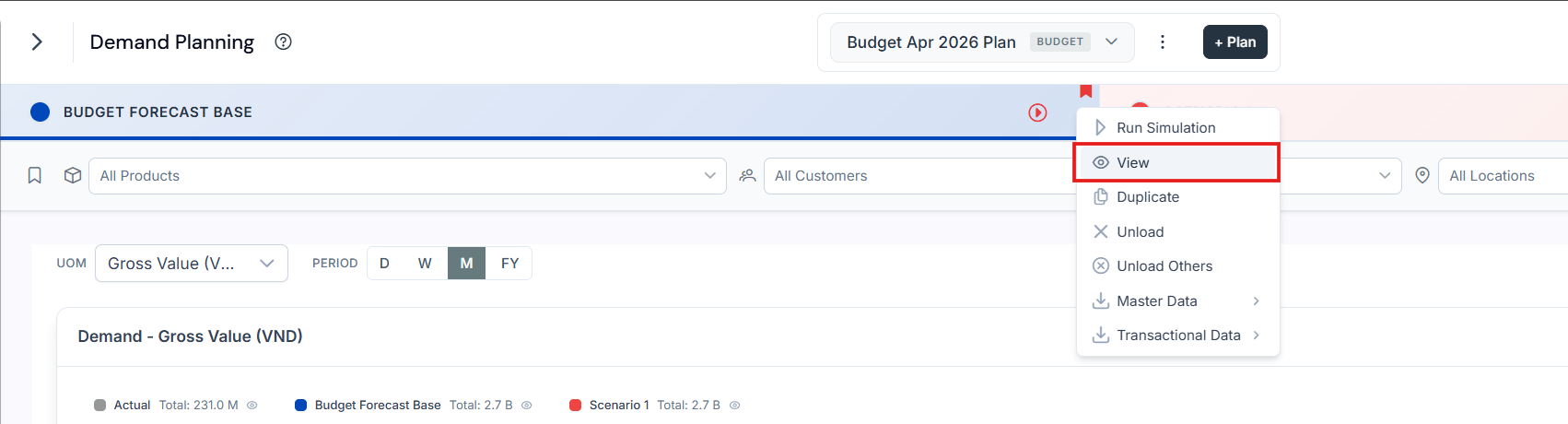
The scenario bar, where you open a Scenario drawer

Opening a drawer from the planning view
Viewing details and collaboration tools
Once the drawer is open, you can explore all the key information about the object.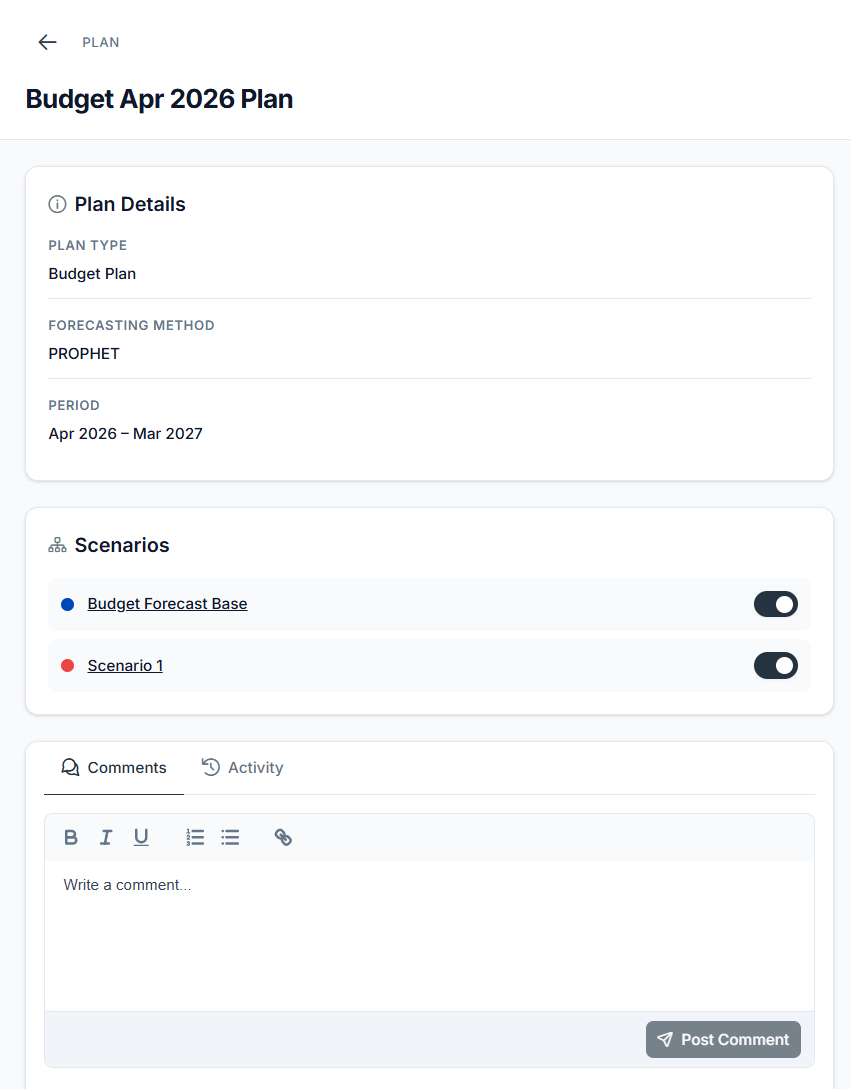
An open drawer with its structured data, Comments, and Activity Log tabs
- A structured data view that presents the object’s attributes clearly.
- A Comments tab where you and your colleagues can exchange feedback directly tied to the object.
- An Activity Log tab that records all changes and actions with timestamps and user details.
Structured data view
Each object detail drawer begins with a structured data view that presents the object’s attributes in a clear and consistent format. This lets you quickly understand the essentials of the object you are working with, without digging into multiple pages. Plan drawer (for example, Budget Apr 2026 Plan) The Plan drawer shows key planning attributes such as plan type, forecasting method, planning period, and linked scenarios. This gives you immediate context for how the plan was set up and which scenarios are connected.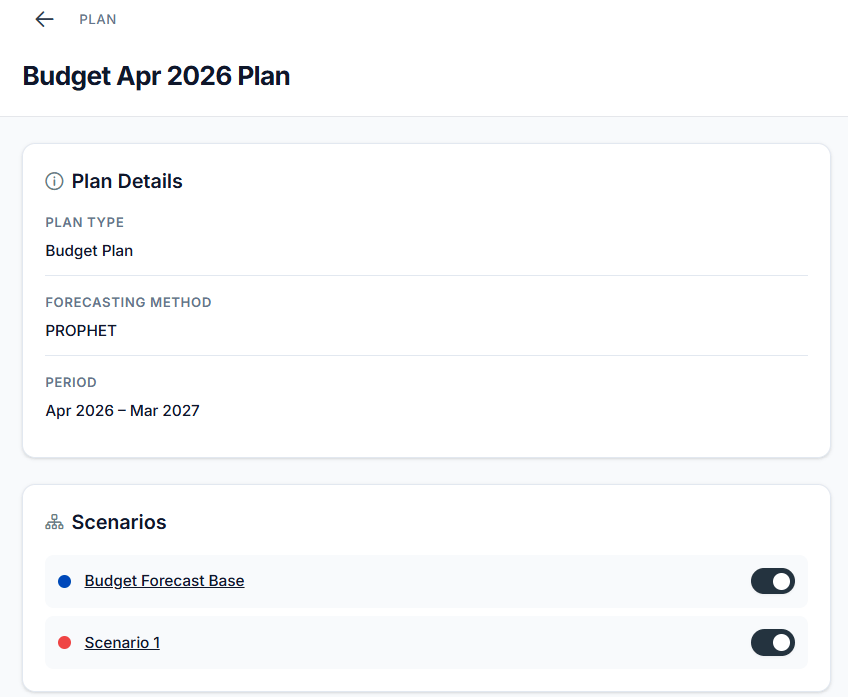
The structured data view of a Plan drawer
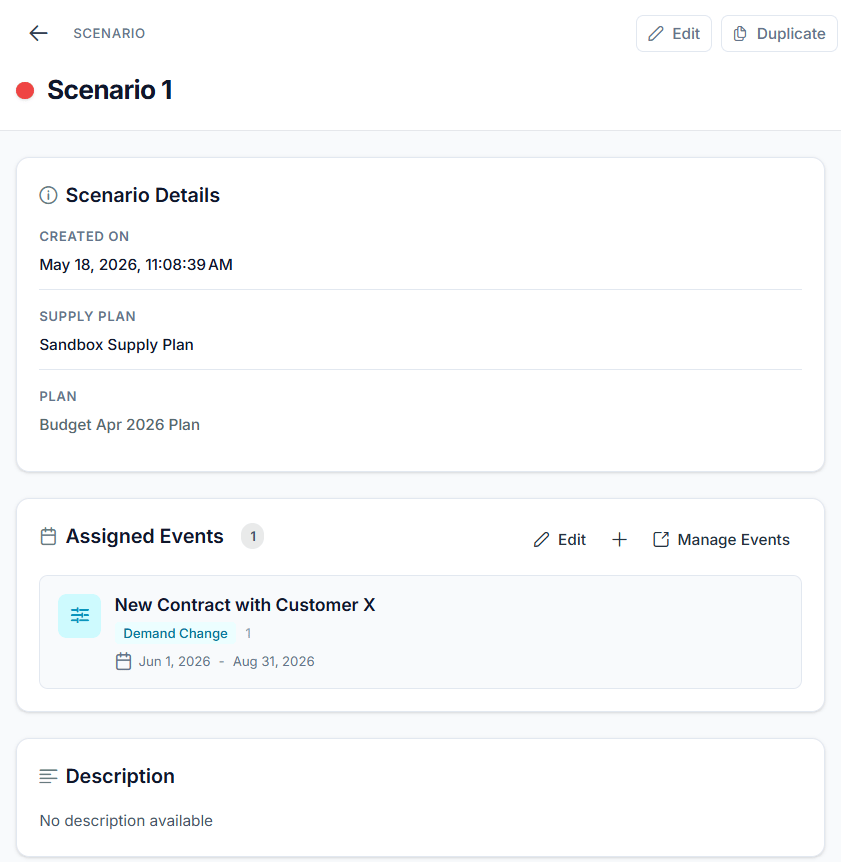
The structured data view of a Scenario drawer