
.svg?fit=max&auto=format&n=NwcmN3Uz2rKt7z_Z&q=85&s=5062a9f3b73c4eb9710e4e28d530d3dd)
Definition
A New Demand Stream event is usually created when you need to account for demand without prior historical data. In other words, it covers launching a new product or establishing a connection with a new group of customers. A New Demand Stream event also refines existing demand forecasts for products that already have historical sales records. It lets you integrate your internal demand estimates (Sales Out) to adjust the baseline forecast.Creating a New Demand Stream event
Click Event in the left side panel to open the SIMCEL Event Management page.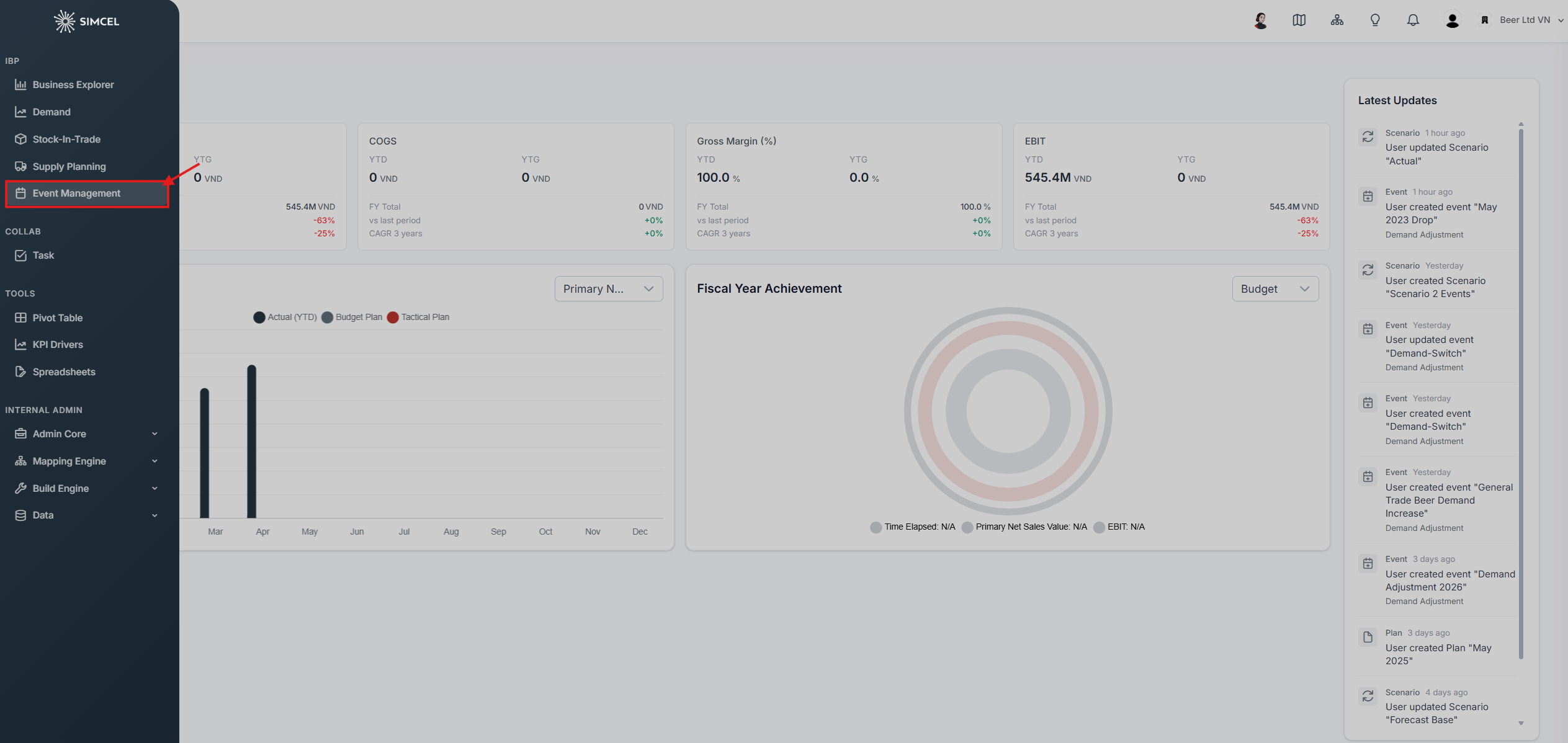
The SIMCEL Event Management page
Create the event
- Click New.
- Select New Demand Stream.
- Click Add.
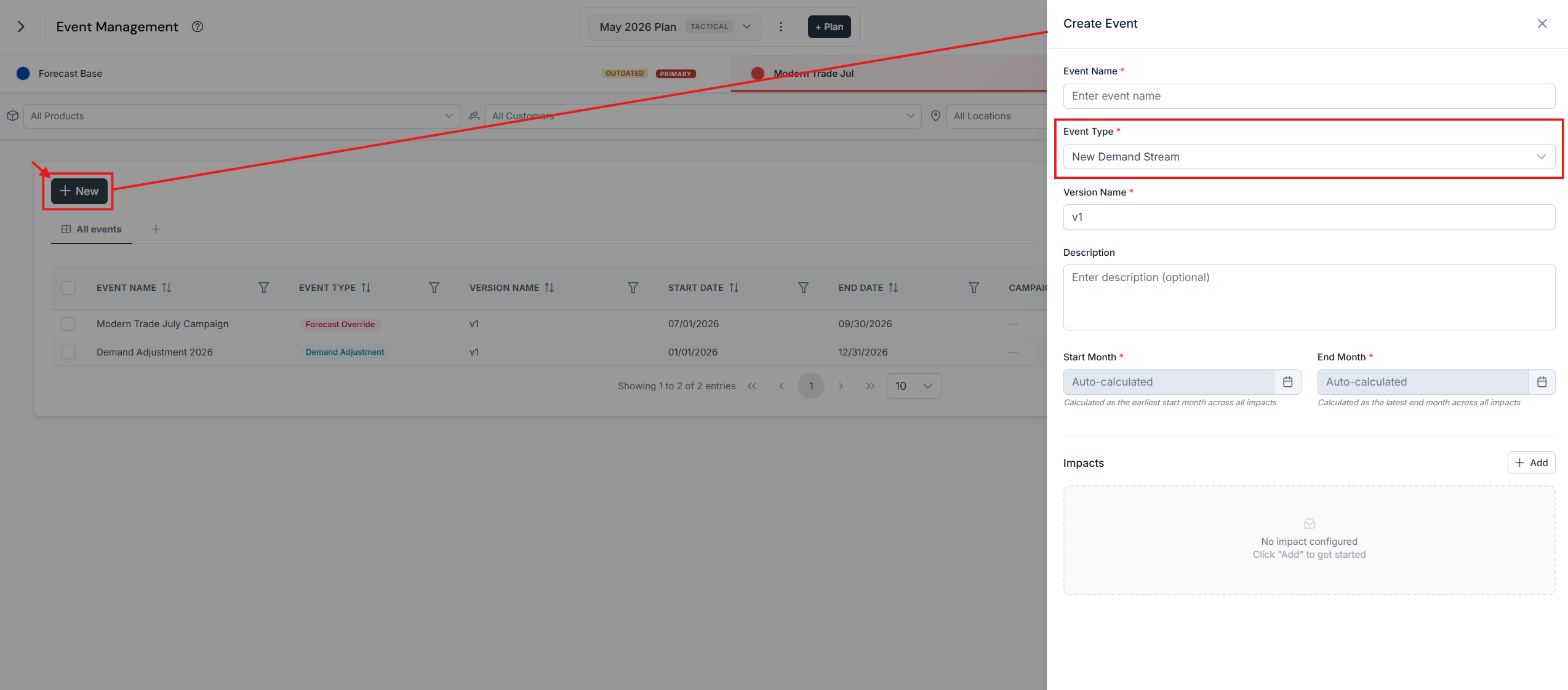
Selecting New Demand Stream as the event type
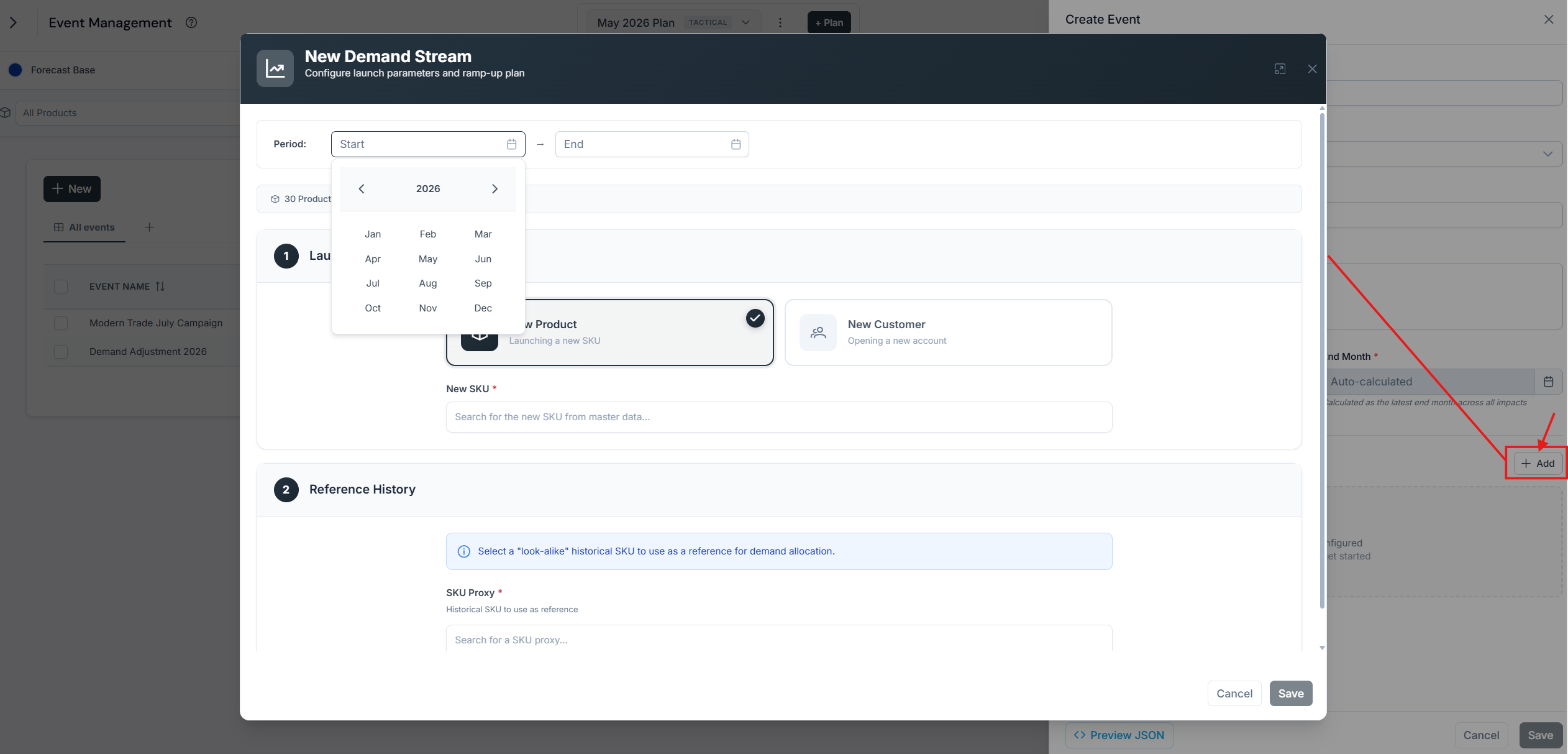
The New Demand Stream definition screen
Create a New Demand Stream for a New Product Introduction (NPI)
Name the event
- Name the new event.
- Name the version.
- Select the period.
Select the new product
Select the product proxy
Provide the monthly demand
Save the event
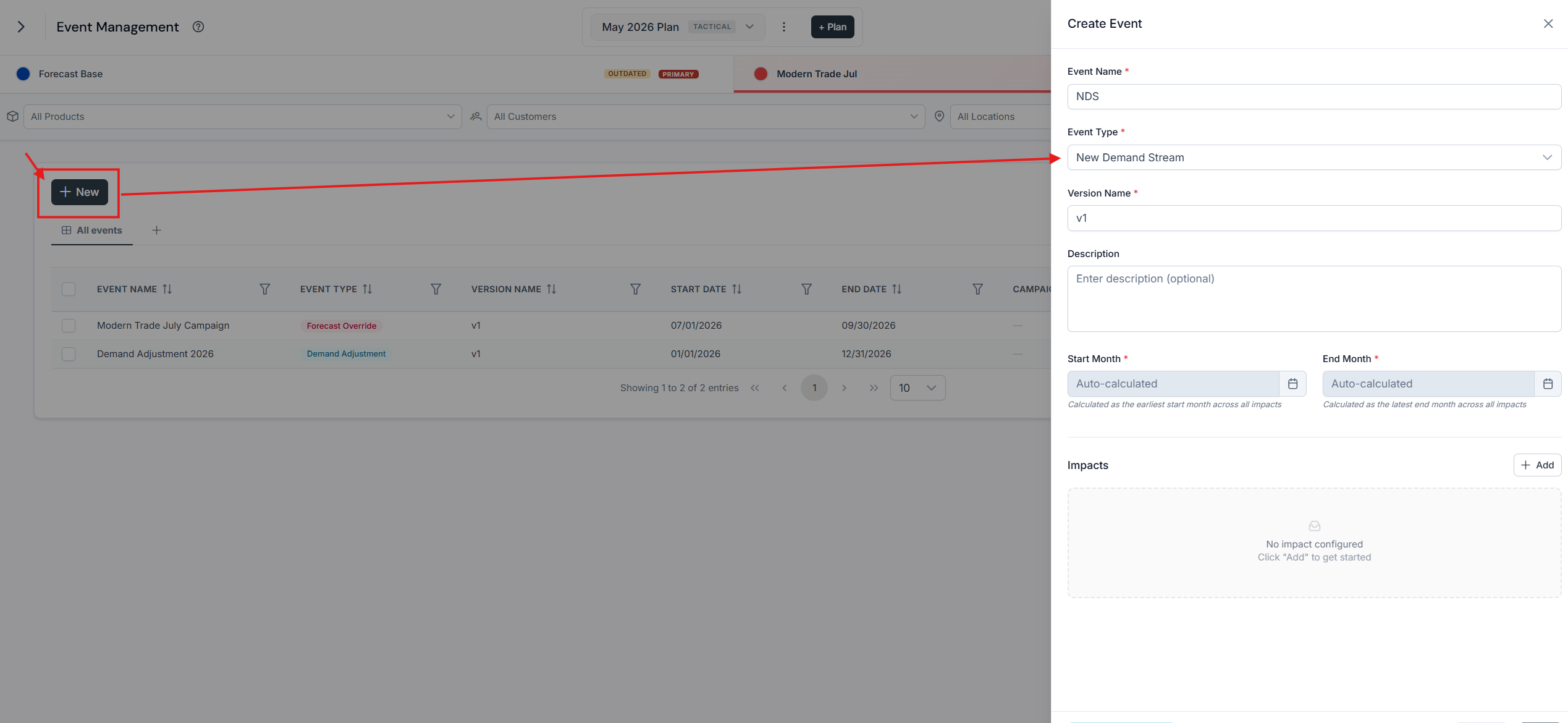
Naming the new demand stream event and version
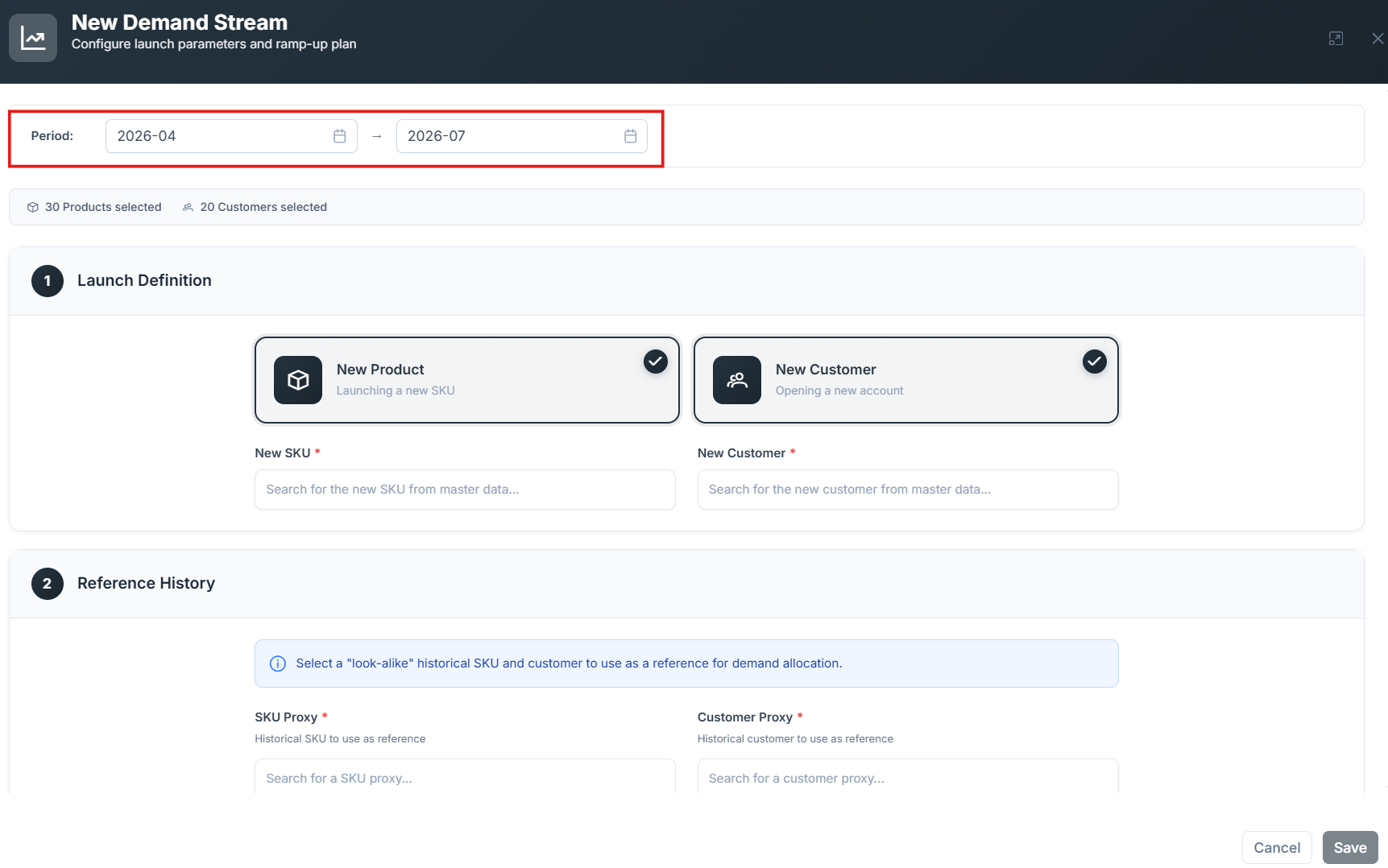
Selecting the period for the new demand stream
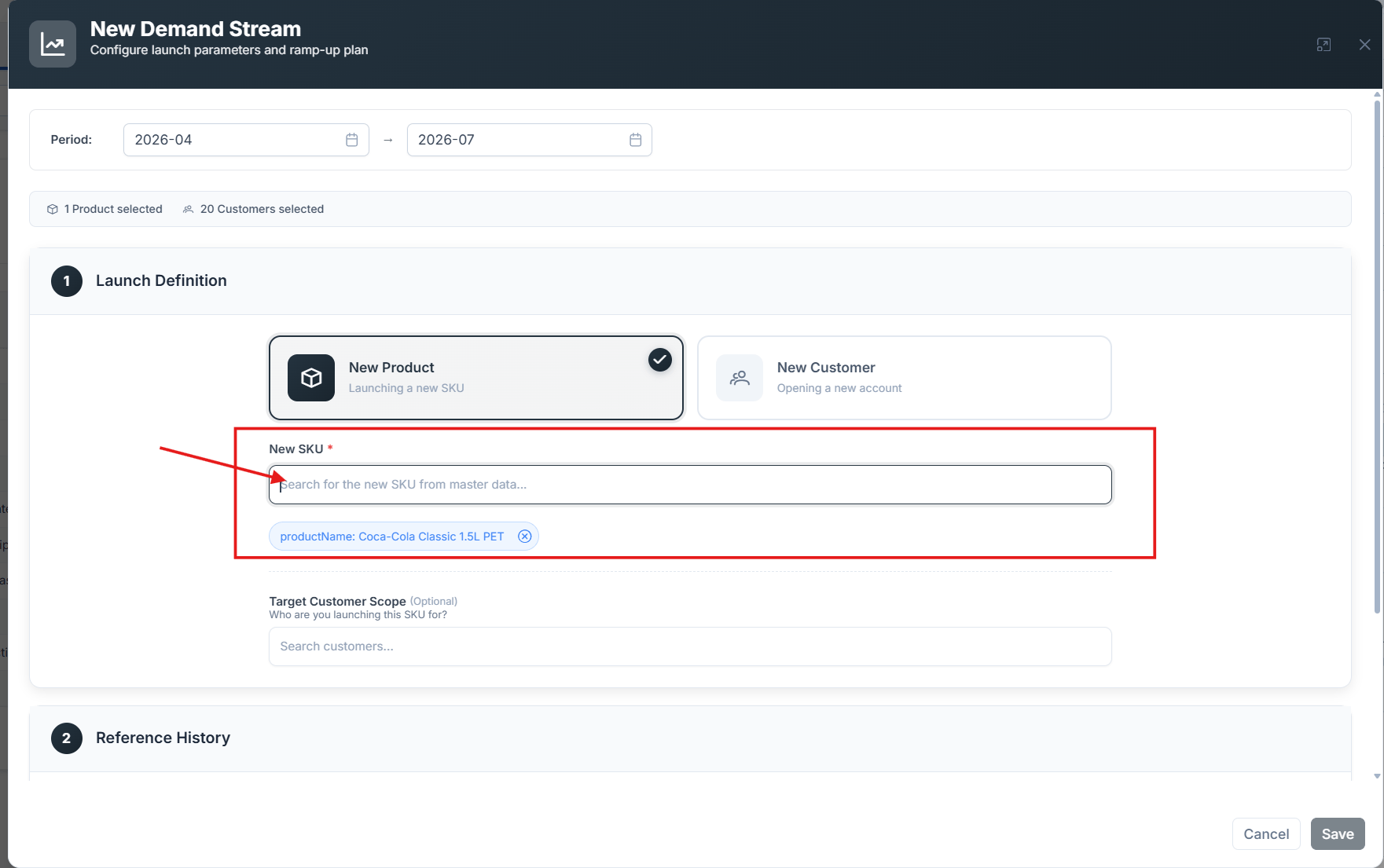
Selecting the new product in the New product menu
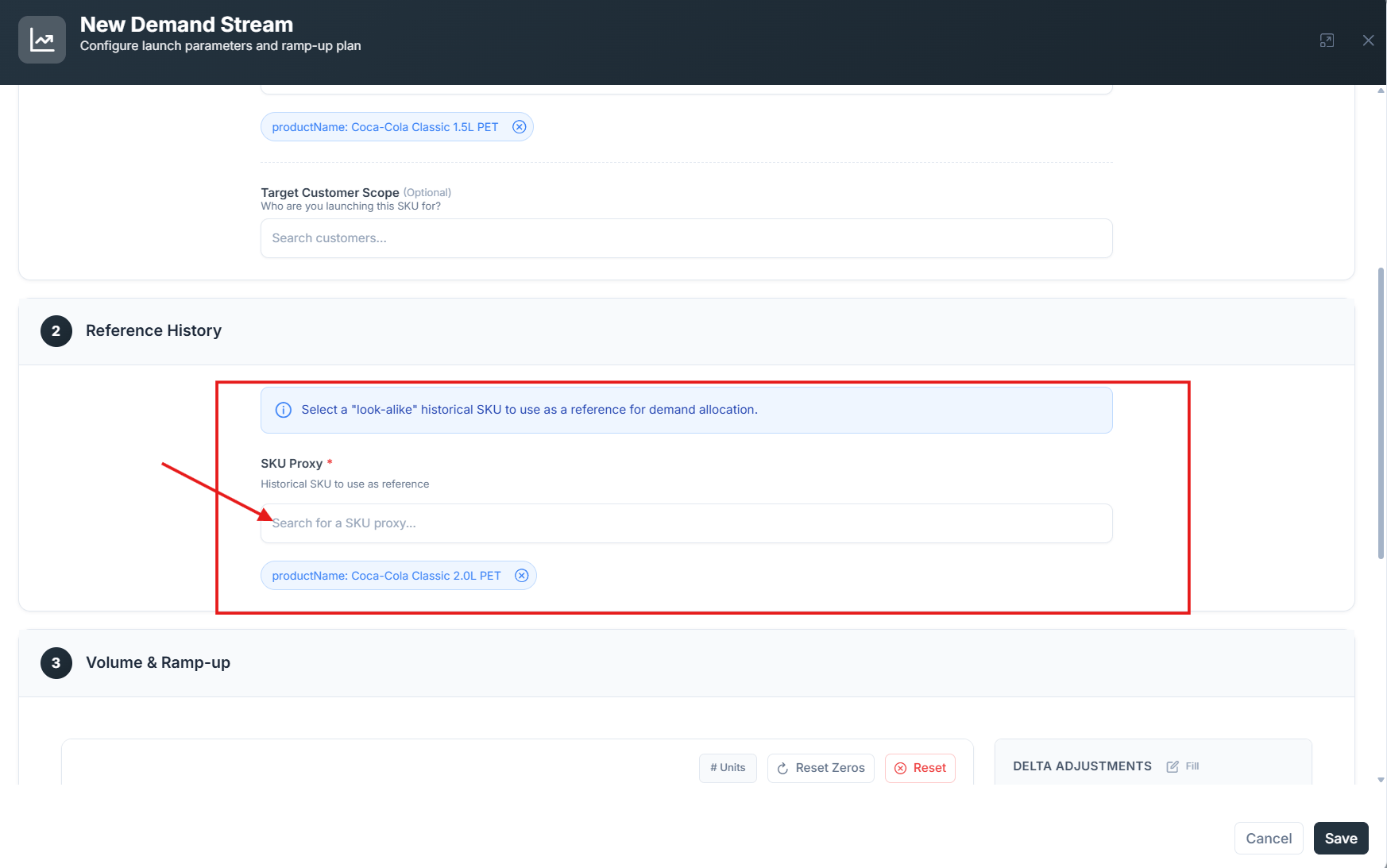
Selecting a product reference as the product proxy
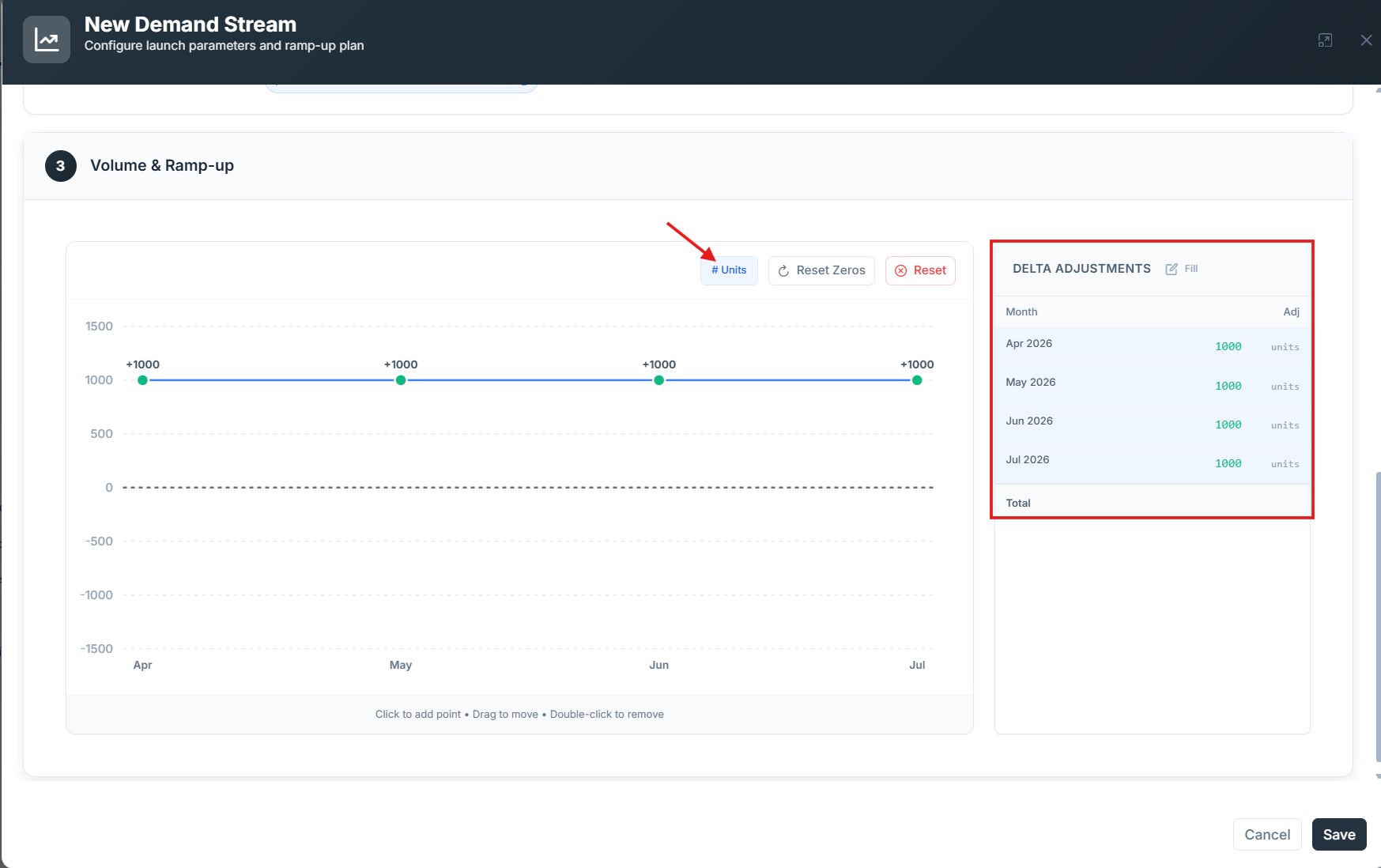
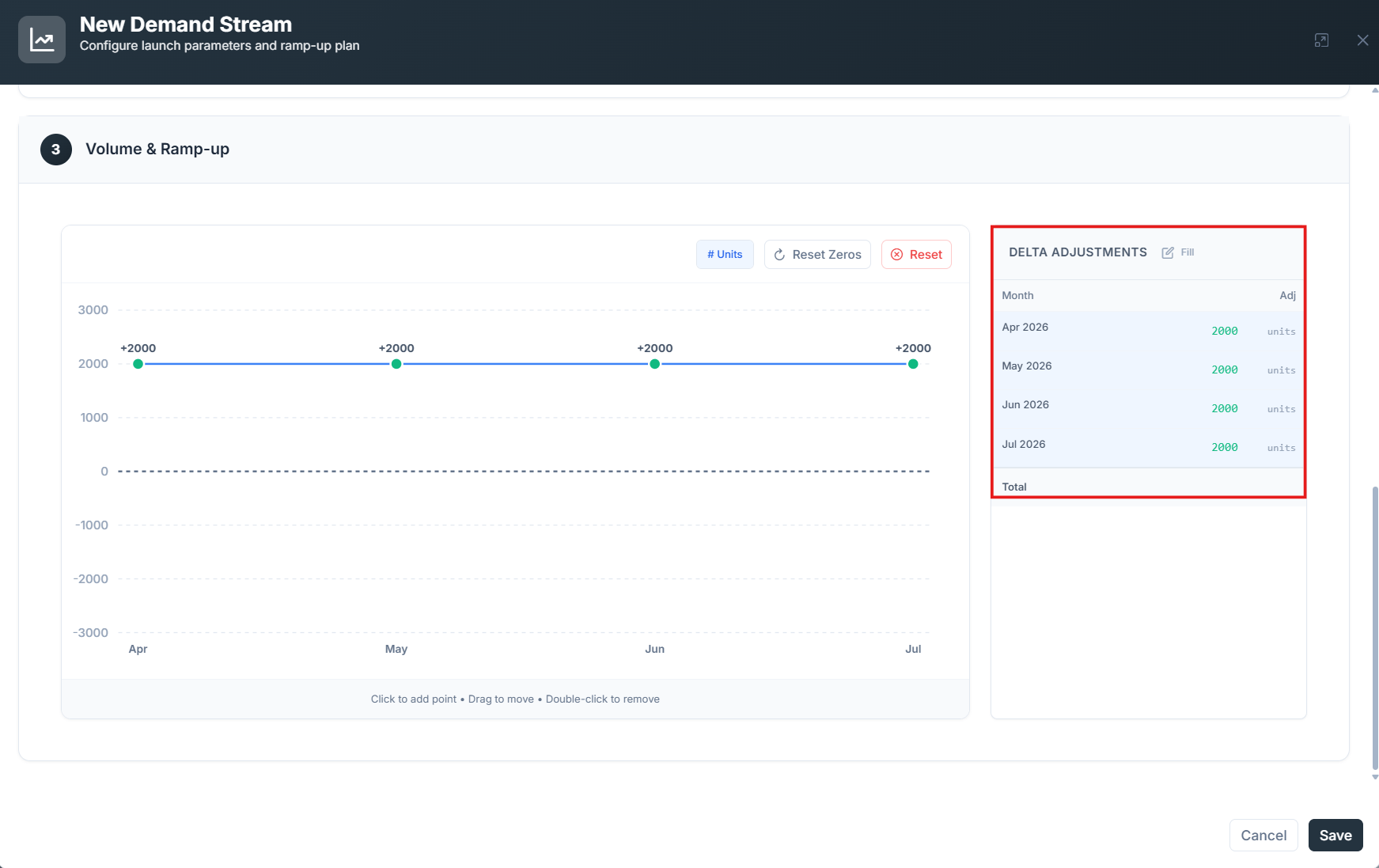
Entering the monthly demand for the new demand stream
Create a New Demand Stream with multiple customer segment impacts
Create the event
- Create a New Demand Stream reflecting a New Product Introduction.
- Name the event and the version.
Add the first impact
- Click Add to set up a new impact.
- Set up the period.
- In Target Customer Scope under Launch Definition, select a customer segment.
- Update the Monthly Demand value, or keep it unchanged.
- Click Save to save the impact.
Add a second impact
- Click + Add within this event to add one more NPI.
- Enter the same product and product proxy information as the first segment, but select a different customer segment in the customer drop-down.
- Define the monthly demand value for this extra NPI.
Save the event
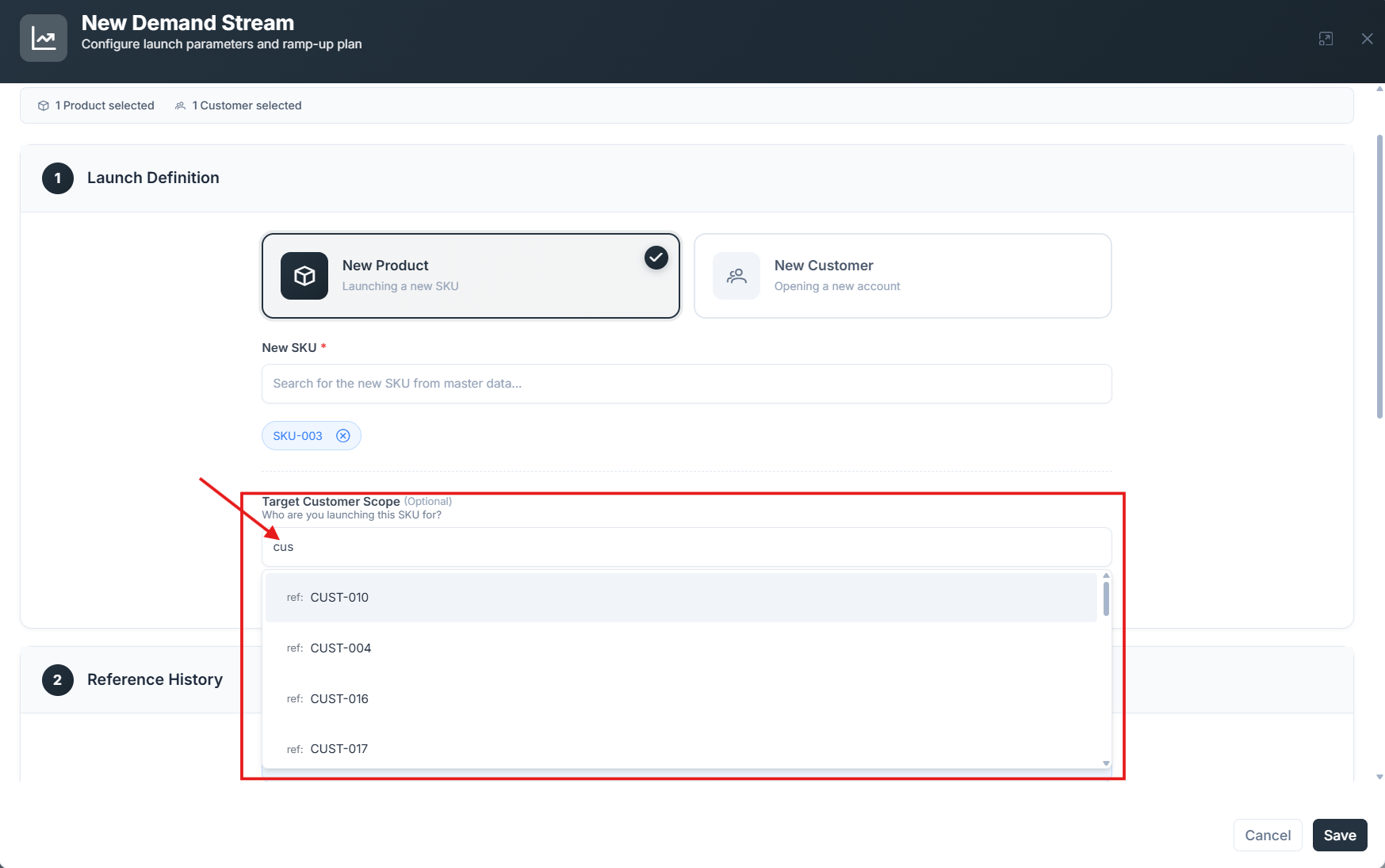
Selecting a customer segment in the Target Customer Scope
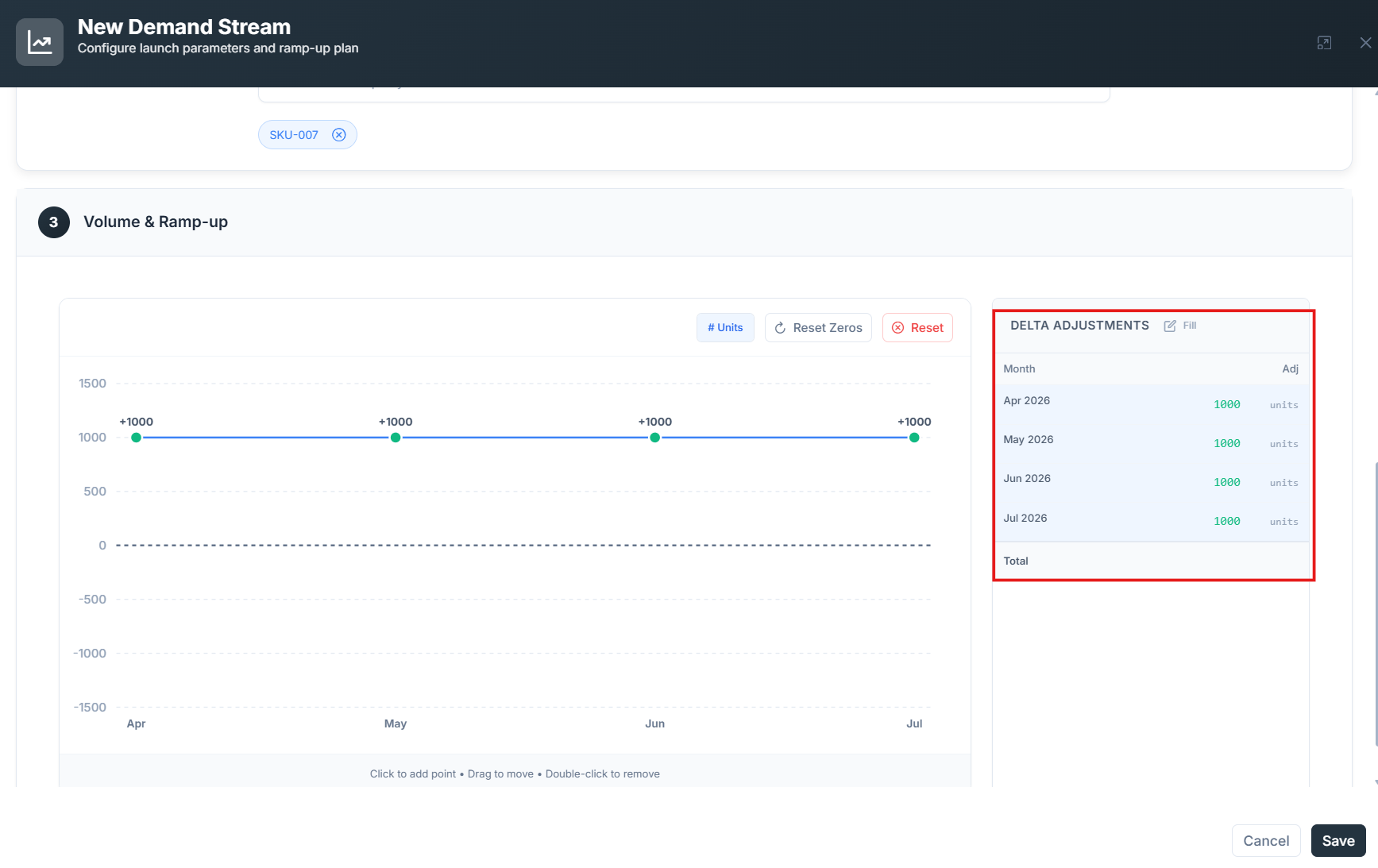
Setting the monthly demand for the first customer segment
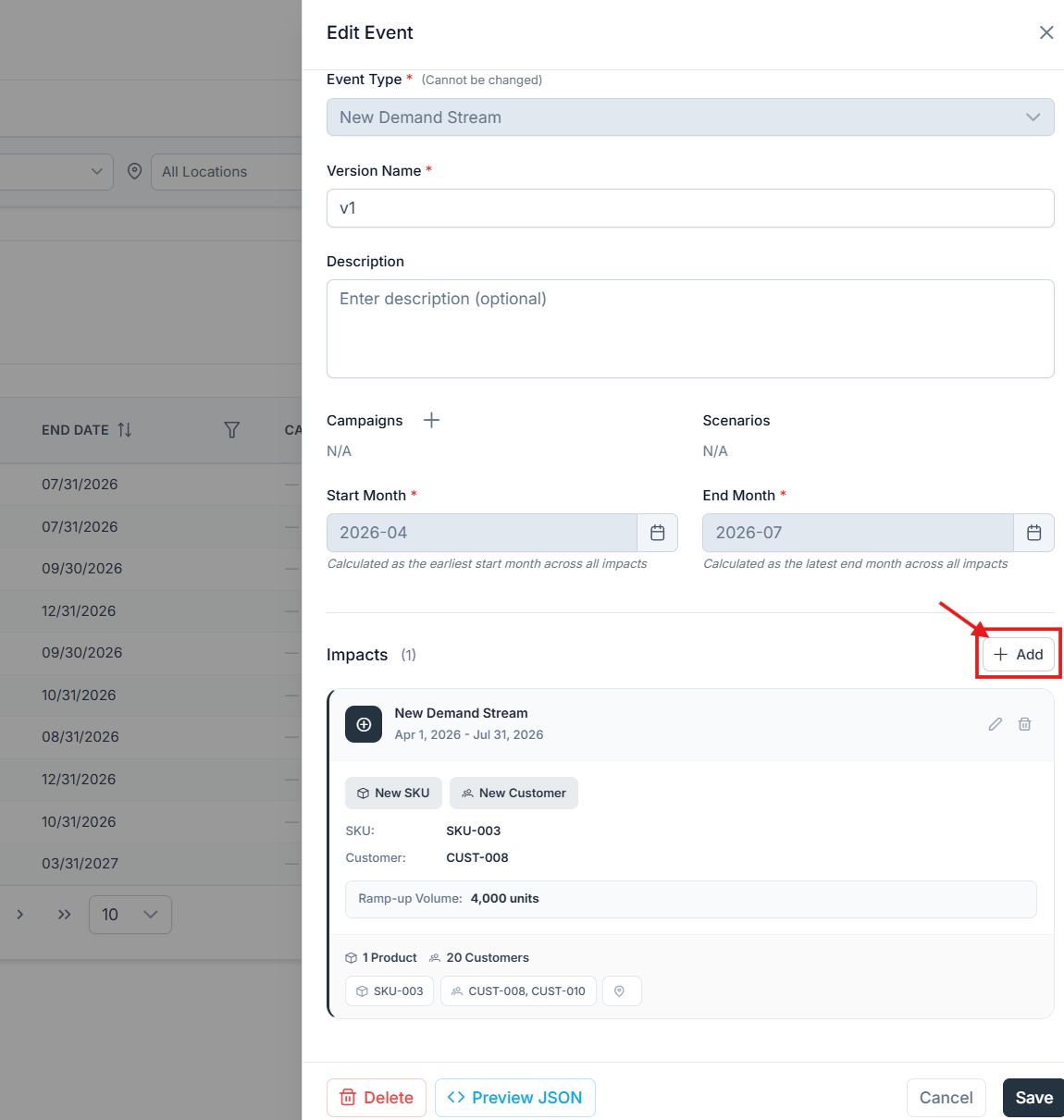
Adding a second impact to the same event
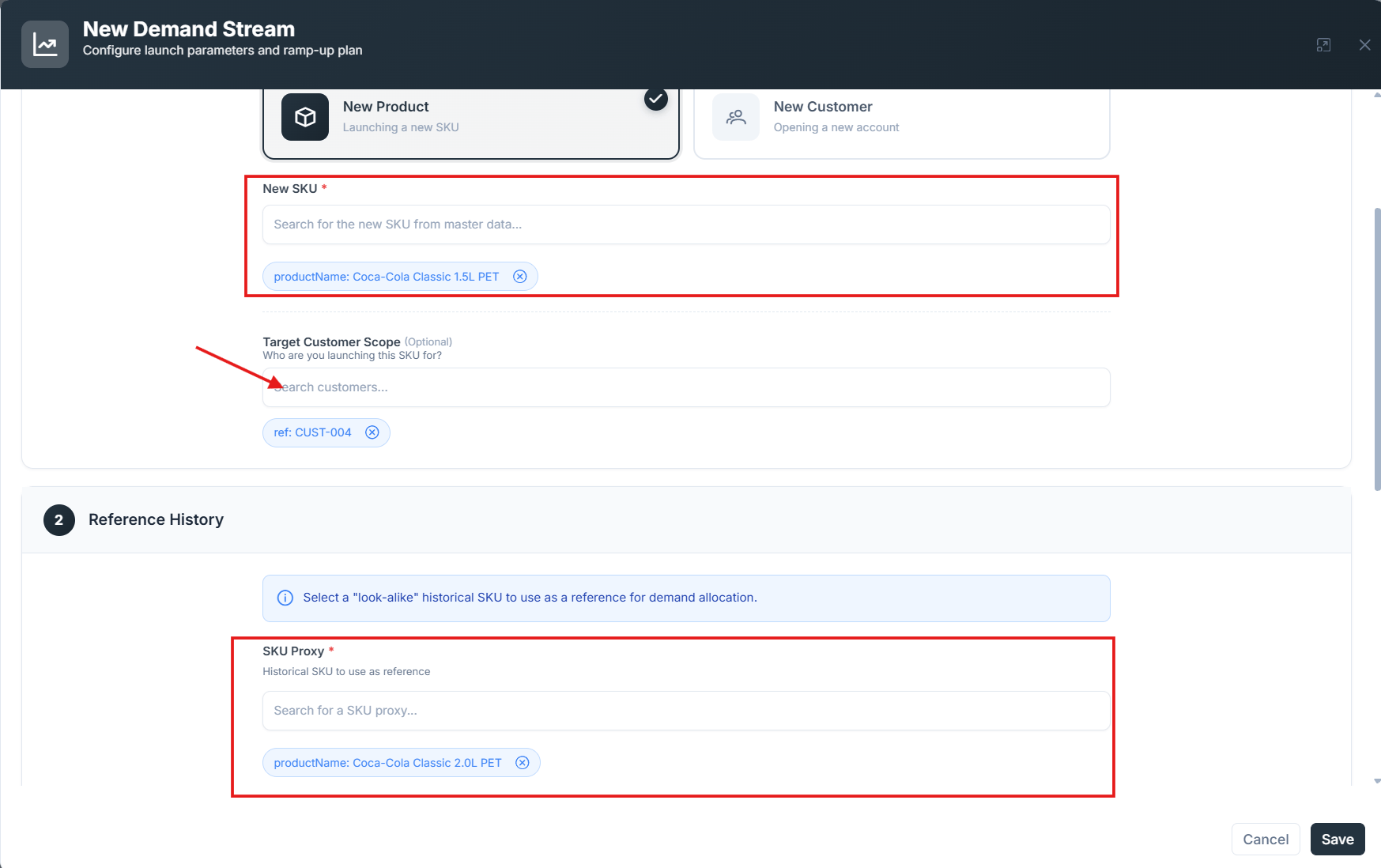
Selecting a different customer segment for the second impact
Setting the monthly demand for the second customer segment